
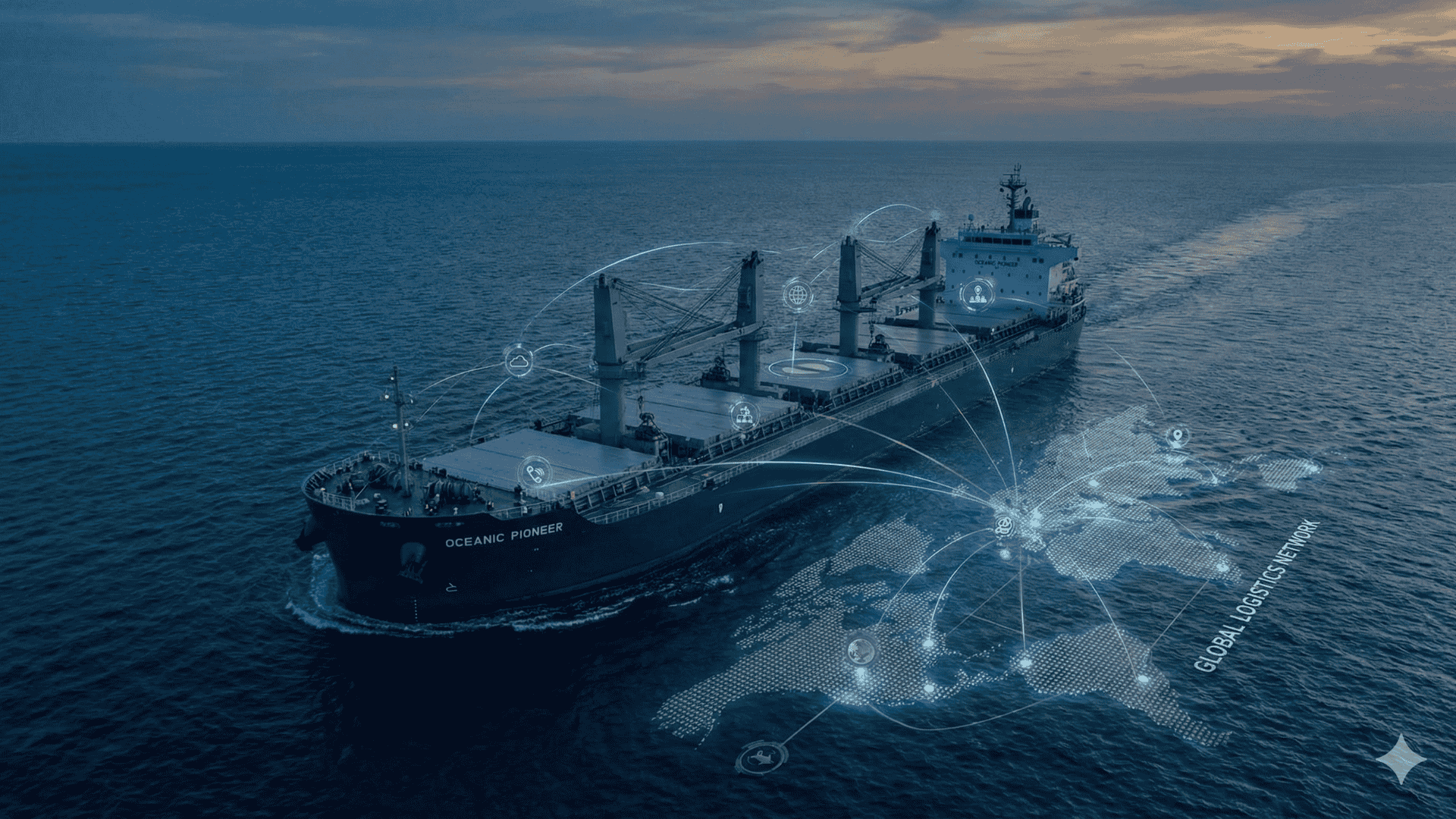
In the high-stakes arena of global logistics, the margin for error is non-existent. Securing a procurement vessel is not merely a transactional activity; it is a critical strategic decision that directly impacts the bottom line and supply chain resilience. Many organizations today face a fragmented landscape defined by volatile freight rates, unpredictable availability, and technical mismatches that bleed revenue. This current state of inefficiency is unsustainable. To thrive, procurement leaders must transition to a model of precision and foresight. This guide leverages the forty-year expertise of Rallo Shipping to bridge the gap between logistical chaos and operational excellence.
The high cost of procurement inefficiencies
Market volatility ruthlessly exposes every weakness in a logistics strategy. Companies that treat the chartering process as a simple administrative task often find themselves trapped in a cycle of reactive spending. Selecting the wrong procurement vessel triggers a domino effect of financial bleeding that extends far beyond the initial invoice.
The most visible penalty is demurrage. When technical specifications are not rigorously matched to specific port infrastructure, operations stall. A vessel with incompatible crane capacity, deck strength, or draft limitations cannot discharge efficiently, forcing it to sit idle while daily penalty rates accumulate. These are not unexpected misfortunes; they are the direct mathematical result of inadequate vetting and planning.
However, the hidden costs of inefficiency are arguably more damaging than the direct fees. Delayed lead times sever the continuity of the supply chain, forcing manufacturers to halt production lines or retailers to miss critical sales windows. In an industry defined by precision, ambiguity regarding arrival times is unacceptable.
Furthermore, reputational capital is difficult to recover once lost. Stakeholders and downstream clients do not accept “logistical complexity” as a valid excuse for failure. When a shipment is stalled due to preventable technical mismatches, the market views it as a reliability issue, not a misfortune.
Operating without a precise procurement strategy is tantamount to gambling with company assets. The current landscape punishes inefficiency with brutal consistency, leaving unprepared organizations to absorb the costs of errors that a strategic approach would have eliminated entirely.
Visualizing a streamlined maritime supply chain
Imagine shifting from a reactive posture, where market volatility dictates your margins, to one of absolute command over your logistics. In this optimized reality, the supply chain ceases to be a source of friction and becomes a synchronized engine of growth. The chaos of technical mismatches and hidden costs is replaced by a framework defined by rigorous predictability and seamless integration.
This transformation hinges on precision. In the ideal scenario, selecting a procurement vessel is no longer a gamble on availability but a calculated move where the asset perfectly matches the cargo specifications. Whether dealing with bulk, break-bulk, or specialized project cargo, the vessel’s capabilities align strictly with the logistical requirements, eliminating the risk of stowage issues or port incompatibility.
Furthermore, the administrative foundation is rock-solid. The “After” phase is characterized by charter party terms that are meticulously drafted to protect the charterer’s interests. Demurrage risks are mitigated, laytime is calculated with accuracy, and legal exposures are neutralized before the voyage commences. This level of foresight ensures that the shipment arrives not just on schedule, but on budget.
Mastering this process grants a formidable competitive advantage. Companies that achieve this state of operational flow do not merely survive market fluctuations; they capitalize on them. They operate with a lean efficiency that competitors struggling with fragmented logistics cannot replicate.
Visualizing this streamlined chain is the first step; executing it is the mandate for modern leadership. Operational excellence is not an aspirational dream, but the necessary standard for any organization aiming to lead in the maritime sector. It is the difference between simply moving cargo and strategically orchestrating global trade.
Step 1: rigorous technical assessment and cargo alignment
Relying on generic specifications during the chartering process creates an immediate operational liability. If your strategy for securing a procurement vessel lacks granular technical depth, you risk chartering tonnage that is fundamentally incompatible with your cargo or port constraints. This inefficiency leads to dead freight, expensive demurrage, and potential damage to the commodity due to improper stowage capabilities. True operational excellence requires a shift toward absolute precision. In an optimized supply chain, the vessel functions as a seamless extension of your logistics strategy, maximizing intake and minimizing turnaround time. Achieving this state guarantees that every dollar spent on freight contributes directly to the safe and timely delivery of your cargo.The bridge to this level of efficiency is a rigorous technical assessment that aligns the specific commodity with the exact vessel class. This process begins by identifying the correct vessel type. While a Bulk Carrier is standard for grain or coal, complex project cargo necessitates a Tweendecker or a Heavy Lift vessel to handle non-standard dimensions. Ignoring these distinctions is the primary cause of logistical failure.Beyond the vessel type, critical technical metrics must be evaluated:
- Deadweight Tonnage (DWT): You must verify that the vessel’s lifting capacity aligns with your cargo volume to avoid paying for unused space.
- Draft Restrictions: Precise calculations of the draft are mandatory to ensure the vessel can safely enter and exit specific load and discharge ports without lightering.
- Gear Requirements: For ports with limited infrastructure, securing a self-geared vessel with sufficient crane capacity is non-negotiable. Conducting this analysis requires deep industry knowledge. Established brokers, such as Rallo Shipping, perform these technical audits to neutralize risks before negotiations begin. By leveraging expert oversight to validate these technical parameters, you prevent costly mismatches and secure a vessel capable of executing the voyage flawlessly.
Step 2: navigating market volatility and freight intelligence
Relying on historical data or gut instinct to time the market is a strategy destined for failure. In the current shipping climate, freight rates do not just fluctuate; they swing violently based on geopolitical shifts and fuel variance. Far too many logistics managers operate reactively, fixing a ship simply when the cargo is ready. This lack of foresight leads to inflated costs and creates a vulnerability where you are forced to accept whatever terms are available, regardless of the price.
Operational excellence requires a fundamental shift in perspective. You must move from a position of vulnerability to one of command, where every chartering decision is calculated to maximize profitability. The goal is to identify the precise window where vessel availability aligns with the most favorable economic terms.
Bridging the gap between reactive spending and strategic investment requires high-level freight intelligence. It is impossible to make an informed decision without analyzing real-time indicators, such as the Baltic Dry Index, alongside specific regional trends. Securing the right procurement vessel is not merely about finding a hull that floats; it is about executing the fixture at the optimal market moment.
This level of precision demands an authoritative partner capable of interpreting complex market positions. A specialized broker does not simply quote a price; they analyze the supply-demand balance to advise on whether to fix immediately or wait for a market correction. Reject the concept of guessing and embrace data-driven decision-making to lock in the best rates. By leveraging deep market insights, you transform logistics from a variable cost into a controlled, strategic asset.
Step 3: negotiating the charter party for risk mitigation
You might secure the technically perfect procurement vessel, but without a robust contract, that asset instantly becomes a liability. Too often, procurement teams rely on standard Charter Party forms, failing to realize these templates are historically skewed to protect shipowners, not charterers. Ambiguous terms regarding liability or delays can turn a profitable operation into a financial disaster, leaving your company exposed to uncapped demurrage claims and legal gridlock.
Imagine a scenario where every potential disruption is accounted for before the voyage begins. In this optimized state, your supply chain remains resilient even during unforeseen delays. A well-negotiated Charter Party acts as a strategic shield, ensuring that your budget is protected and your operational timeline is respected, regardless of market volatility.
Bridging the gap between legal exposure and contractual security requires granular attention to detail. It is not enough to agree on a freight rate; you must aggressively negotiate the fine print. Critical clauses, specifically laytime calculations and force majeure definitions, must be drafted with absolute precision to eliminate the “gray areas” that often lead to inflated costs.
This is where deep market heritage becomes a tangible asset. Leveraging four decades of insight, such as the expertise found at Rallo Shipping, allows for the renegotiation of terms to explicitly favor the charterer’s procurement needs. True risk mitigation comes from identifying the traps in a standard text and rewriting them to serve your commercial interests. By applying this level of legal foresight, the contract evolves from a mere formality into the strongest link in your logistics chain.
Leveraging independent expertise to secure the vessel
Relying on standard freight forwarders for complex chartering creates a dangerous blind spot in your supply chain. When you depend on generalists, you are often limited to a “captive” fleet or a restricted network of carriers. This leads to operational friction where the cargo is forced to fit the available ship, rather than sourcing the precise procurement vessel required for the project. The result is a cycle of reactive decision-making, inflated costs, and unacceptable technical risks.
Operational excellence looks entirely different. In an optimized supply chain, market transparency is absolute. You possess the ability to view the entire shipping landscape, gaining access to “hidden” capacity that never appears on public exchanges. True security means having the power to negotiate terms based on real-time data, ensuring that vessel specifications align perfectly with your cargo requirements and timeline, rather than compromising on safety or price.
Bridging the gap between these two realities requires a distinct shift in strategy: moving from general forwarding to specialized ship-brokering. While forwarders aggregate volume, independent brokers curate specific solutions. An independent partner provides the neutrality necessary to audit the entire market without bias toward specific shipowners, prioritizing your cargo’s safety above carrier relationships.
This is where deep expertise becomes the catalyst for transformation. Partners like Rallo Shipping utilize decades of independent experience to unlock exclusive global networks, filtering out noise to find the exact tonnage required. By leveraging this level of specialized oversight, you transform vessel procurement from a vulnerability into a strategic asset, effectively moving your logistics operations from a state of constant risk to a position of permanent security.
Conclusion
The complexity of the maritime sector demands more than generalist solutions; it requires specialized intervention. By bridging the gap between technical requirements and market realities, organizations can secure not just a procurement vessel, but a competitive edge. The transition from logistical uncertainty to strategic control is achievable through a structured approach and seasoned partnership. With over four decades of navigating these waters, Rallo Shipping stands ready to guide procurement leaders toward that horizon of operational excellence.
2 commenti
Lascia un commento
Autore

divisione4@webleaders.it
Articoli correlati

The Future of Modular Kiosks: Blending African Design with Modern Technology
When you think of a kiosk, you might picture a tiny coffee stand at the airport or a simple ticket booth at...
Leggere tutti
Old Murano Glass Vases: Where Centuries of Tradition Meet Future Tech
When you hear the words “Murano glass,” you might instantly picture fragile, colorful vases, swirls of rich colors, or even your grandmother’s...
Leggere tutti
Cross Dock Facility: The Beating Heart of High-Speed Supply Chains
Imagine the modern supply chain as a vast network of highways. Goods are the vehicles, traveling from factories to warehouses, then to...
Leggere tutti
Portable VOC Fume Extractor: The Smart Solution for Industrial Air Quality
Introduction In today’s industrial environments, ensuring clean air is no longer a luxury—it’s a necessity. Whether you’re in electronics manufacturing, chemical processing,...
Leggere tutti
https://shorturl.fm/qD6a5
https://shorturl.fm/JVDFN